Anna Urbanova's Fall from Stardom
A Gentleman in MoscowAnna Urbanova’s fall from stardom in 1928 shows how quickly artistic celebrity could be undone by a change in film technology and how little fame protected her from political and material reversals. At twenty-nine, she still had one of the screen’s most alluring faces, but audiences who had imagined her voice in silent films recoiled when they heard her husky tenor in talking pictures. Her career could not survive the transition from an imagined voice to a recorded one.
Political and Professional Vulnerability
Anna’s decline began amid the troubles of Rosotsky, whose latest film had drawn attacks for its nostalgia, focus on individual experience, and apparent distance from collective struggle. After the criticism was repeated in other publications, the film received only limited distribution in second-rate theaters, and Rosotsky’s political reliability came under question. Anna understood that his fall from favor could pull her down with him. She began avoiding public appearances in his company and praised the aesthetics of other directors, a calculated effort to find another route to stardom.
That maneuver did not secure her future. The arrival of talking pictures made her voice, rather than her association with Rosotsky, the decisive obstacle: her screen image remained compelling, but audiences were unprepared for the husky tenor they heard. In spring 1928, the narrator describes her as a has-been. The reversal was especially stark because she was only twenty-nine and had been a celebrated screen presence.
Loss of Property and a Refusal to Return
Her professional collapse coincided with the removal of the material world she had built around herself. The gilded chairs, painted armoires, and Louis Quatorze dresser were reclaimed, as were the fur merchant’s mansion and the Peterhof dacha. Within months, Anna was left with two trunks of clothing and train fare in her purse for her hometown outside Odessa. The loss was not simply a reduction in luxury: the objects and residences that had marked her former life could be reclaimed through the stroke of a pen.
Anna did not use the fare to go home. Instead, she moved into a one-room apartment with her sixty-year-old dresser, determined never to return to her hometown. The decision gives the episode its strongest measure of resolve: deprived of her grand residences and public standing, she chose an uncertain life away from home over retreat to the place she had left.
A Later Appearance
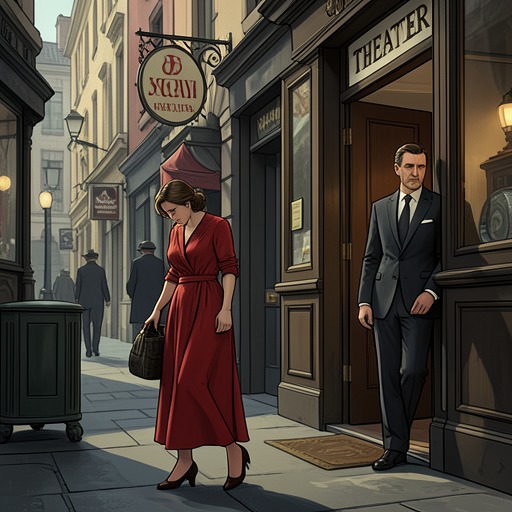
Eight months after losing her mansion, in November 1928, Anna appeared again at the Boyarsky Restaurant. She entered in a red sleeveless dress and high-heeled shoes while Count Alexander Ilyich Rostov was pouring water for an Italian importer. Andrey led her to a table for two in the corner, where she explained that a guest would soon join her. The scene does not establish that her career had recovered; it shows instead that, after the sharp losses of the spring, she remained socially present and continued to make plans.
Significance
Anna’s fall is driven by two forms of dispossession. A new medium exposes a quality of her performance that the silent screen had allowed audiences to imagine, while the state’s reclaiming of serial-numbered furnishings and properties dismantles the material setting of her former celebrity. Her attempt to distance herself from Rosotsky addresses the political danger but cannot protect her from technological change or property loss. The later glimpse of her at the restaurant leaves her story open: stardom has ended, but she has not gone home or disappeared from the life of the city.